
That €5 fee is the entire honest version of skip-the-line pricing. It buys you a guaranteed timed slot, not a shorter queue. Everything a reseller charges above €25 is buying you something else, and this page names exactly what.
People overpay because nobody tells them what the extra money is for. Most guides call resellers “more expensive” and leave it there, which reads evasive. So, plainly: resellers pre-purchase inventory, so you are paying for access to a date the Vatican has already sold out of, plus a cancellation option the Vatican does not offer at any price. Official tickets are non-refundable, full stop.
Three things decide which one is yours: how many days you have before your visit, what month you are going, and how much you want to spend. Slot the Vatican into a tight itinerary with my 3-day Rome plan, then come back and pick your ticket.
How Vatican Ticketing Actually Works (And What Skip-the-Line Really Skips)
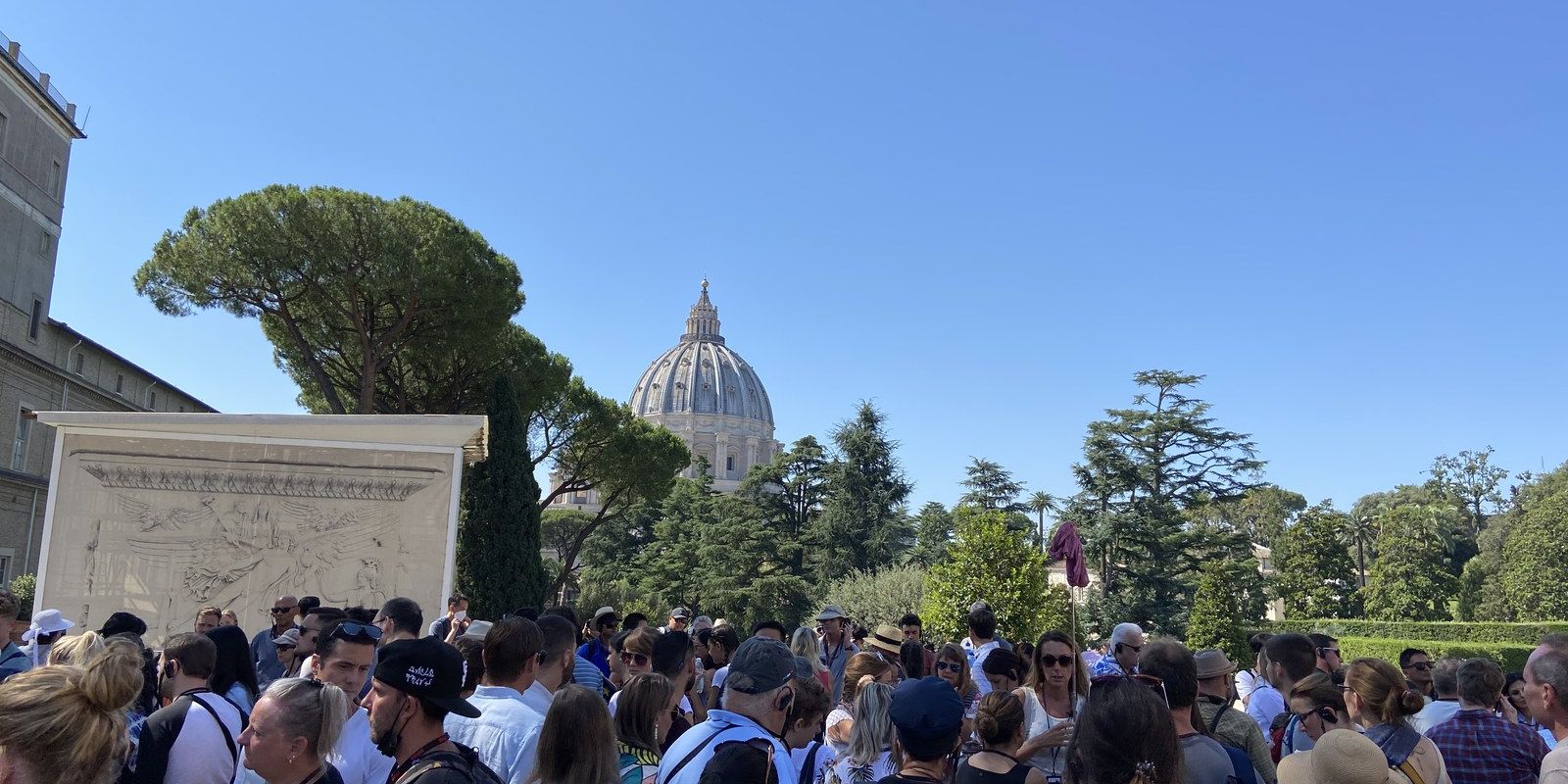
Every ticket on this page puts you in the same queue. Official, reseller, guided tour, no difference: everyone walks through the same security and bag check at the Viale Vaticano entrance. The line you pictured skipping is not the line you skip.
Every price and hour below was checked against museivaticani.va on 23 August 2026. The official site comes first in every buying decision here; the reseller links exist for one situation only, an empty official calendar.
What you are actually buying
The €5 online fee buys a timed entry slot: a guaranteed admission window. That removes the on-the-day ticket queue and the risk of arriving to find the museum at capacity. It does not remove security.
Bags are the other thing people get wrong. The rule is published, in the Museums’ own cloakroom regulations: anything bigger than 40 x 35 x 15 cm goes to the cloakroom, and a rucksack passes only if it sticks out less than 15 cm past your body. Food and drink, full-length umbrellas and tripods get checked too, and the cloakroom refuses exactly what you would want to hand over: coats, cameras, phones, wallets. Guard staff keep a catch-all discretion on top, so borderline means checked. Travel light.
One relief: belts and shoes stay on. This is not airport security.
Hours, closures, and the days you cannot go
The Museums open Monday to Saturday, 08:00 to 20:00, last entry 18:00. Regular Sundays they are closed. The last Sunday of each month runs 09:00 to 14:00, last entry 12:30, and entry is free.
The 2026 closure dates: 1 and 6 January, 11 February, 19 March, 6 April (Easter Monday), 1 May, 29 June, 14 and 15 August, and 8, 25 and 26 December. If a guide elsewhere lists 1 November, it is wrong. That date is not on the official closure list.
A trap sits between those two lists. When the last Sunday lands on a closure date, that month has no free Sunday at all. In 2026 that happens twice: 29 June and 25 December.
The booking window, and why lead time is everything
How far ahead can you book? Further than the internet says. The two-months figure gets repeated everywhere, but when I checked on 24 August I could carry a 24 December slot all the way to the enter-your-name step, four months out. Treat any quoted window as a floor: dates are open at least two months ahead, often much further, and the quicker you book once yours shows, the better.
How fast those dates go is a question nobody can answer with data, because no operator publishes demand figures. Travelers consistently report that peak-season morning slots disappear weeks ahead, while low season often still has availability days out.
Then the part that makes lead time the highest-stakes variable here. Official tickets are non-refundable and non-modifiable. Not the date, not the time, not the ticket type. The one exception is a Vatican-side closure, which triggers a rebooking attempt or a 100% refund. Booking early is a real commitment, and that inflexibility is the strongest argument for the reseller option further down.
For my own visit on 14 September I booked four weeks out and took the last slot on the calendar; the midweek dates around it were already gone. That is what “sells out weeks ahead” means in practice.
Dress code, the Sistine Chapel, and one thing you can stop worrying about
Shoulders and knees covered, checked at the Museums, Sistine Chapel and Basilica. Official wording also covers visible tattoos or personal signs that may offend Catholic decency. Turned away, you can buy a plastic cloak on site. Full breakdown in my Rome church dress code guide.
Inside the Sistine Chapel: absolute silence, no photography. Both enforced.
One thing to stop worrying about: the extraordinary maintenance on Michelangelo’s Last Judgment began on 1 February 2026 and is finished. No scaffolding, nothing obstructed. Older guides still describe active works; ignore them.
One aside: people selling “tickets” on the pavement near the entrance are not the Vatican, covered in Rome scams and safety.
With the mechanics settled, the only question left is where you buy from.
1. Official Site (museivaticani.va): The Default, and the Cheapest
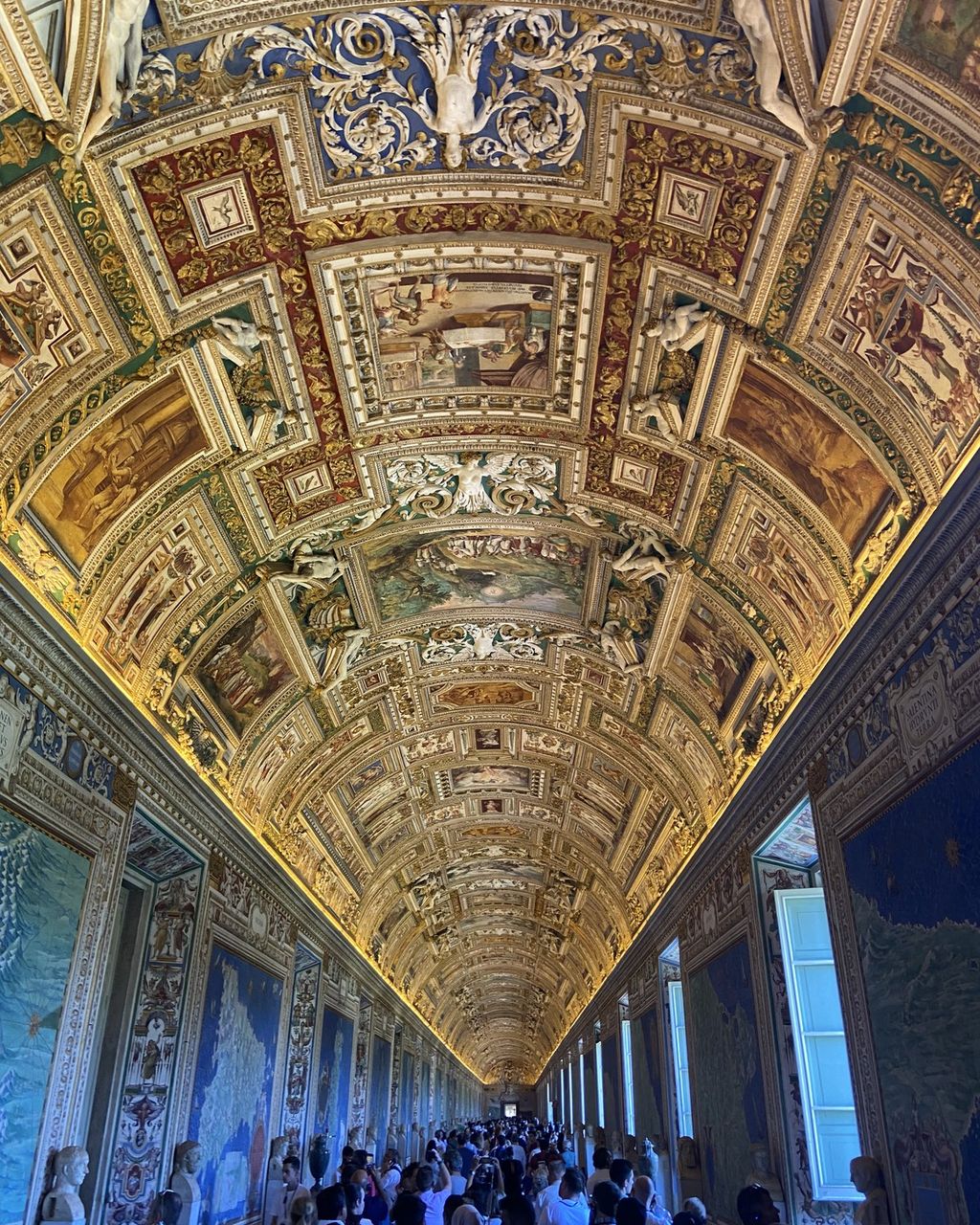
If your date is open on the official site, your decision is already made. Stop reading, book it, come back for the rest.
What you get: timed-entry admission to the Vatican Museums and the Sistine Chapel, direct from the source. It is also the only route to free last-Sunday entry.
Price: €25 for an adult online, which is €20 entry plus the €5 booking fee. At the door it is €20, if you are willing to gamble on walk-up. Reduced tickets are €10 at the door and €15 online. Free entry covers children under 7, disabled visitors with certified invalidity of 67% or more plus a companion, and ICOM/ICOMOS cardholders and museum professionals.
When it wins: you have lead time, your date is fixed, and you want the lowest price anywhere. From November to February it wins by default, because availability is rarely the problem in low season. Book as soon as your date shows on the calendar; as a rule of thumb it is there at least two months out, often much further.
When it loses: your date shows sold out, you need any possibility of cancelling, or you want a guide or the Basilica shortcut. Non-refundable and non-modifiable is not a technicality. It is the whole risk.
Checkout makes you tick the non-refundable box, and that tick is the moment to be certain about your date. If the calendar shows nothing for you, check again the evening before and the morning of. Travelers report that inventory genuinely gets released late, and looking costs two minutes.
Book direct at tickets.museivaticani.va. No affiliate link, no markup, no middleman.
Best for: anyone booking three or more weeks out with a date they will not move. Skip if: your date is gone, or you need a refund option.
2. Tiqets: The Fallback When Your Date Is Sold Out
Your date is greyed out on the official calendar, your flights are booked, and you are working out what a guaranteed entry is worth to you. That is the entire Tiqets value proposition, stated honestly.
Resellers buy inventory ahead of time and resell it. You are paying for two things the Vatican will not sell you at any price: access to a date they have already sold out of, and the ability to cancel. Neither is a rip-off. Neither is worth a cent if the official calendar is open for your date.
What you get: fast-track entrance to the Vatican Museums and Sistine Chapel. No guide, no audio guide on the base product, no St. Peter’s Basilica access.
Price: from about €35, and it moves with demand rather than sitting at a fixed markup. On the calendar I pulled on 24 August, the next two days cost €35, the rest of the month €38 to €42, and every mid-September date sat flat at €52 before easing again toward late September. Proximity, demand and leftover stock set the number, so against the €25 official ticket you are paying a €10 to €27 premium depending on your date. Snapshots, not promises.
When it wins: official is sold out for your date, or you genuinely might cancel. The refund policy is the underrated half. Pick the refundable option at checkout and you can cancel by 23:59 the day before your visit for a full refund. The Vatican offers nothing like that. Note the limit: cancellation only, no rescheduling.
When it loses: your date is available on the official site. Then you are paying a markup for nothing.
One flag before the next section: the standalone fast-track ticket does not get you into St. Peter’s Basilica. Nothing you buy as a bare ticket does.
Check tickets.museivaticani.va first. Only if it is empty for your date, check current Tiqets availability for your date.
Tiqets is the right answer to exactly one question, which is “the Vatican says no, now what”. If the Vatican says yes, it is the wrong answer.
3. GetYourGuide Tours: The Only Way to the Basilica Shortcut
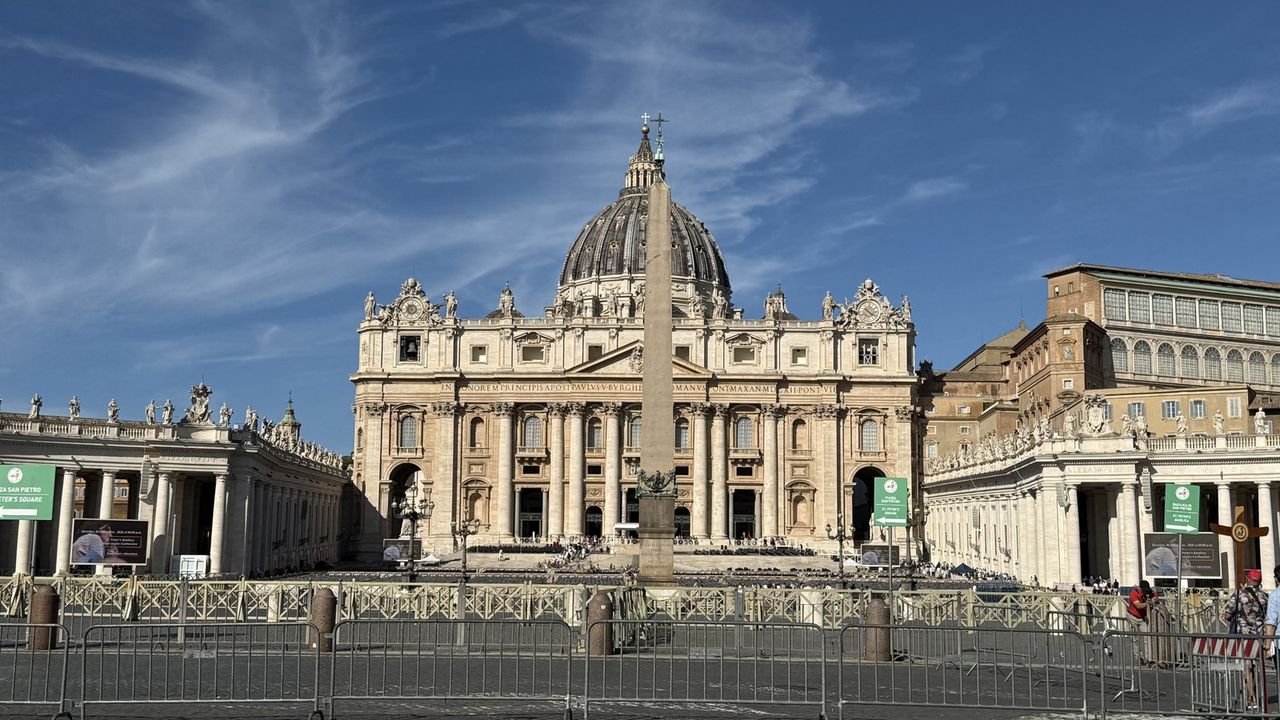
There is one door in the Vatican that no ticket price can open, however much you pay. It opens only for guided groups.
The passage from the Sistine Chapel through to St. Peter’s Basilica lets a tour group walk straight into the Basilica. Everyone else exits the Museums, walks the long way around the walls, and queues for Basilica security a second time. That shortcut is offered through guided tours, not standalone tickets.
Here is where most people waste the premium: the shortcut is only on listings whose name includes “+ St. Peter’s Basilica”. Cheaper Express-style variants exclude it explicitly. Read the variant name before you pay. If the Basilica is not in the title, you are not getting the passage.
What you get: a guided tour of the Museums and Sistine Chapel, a tour-group fast-track entrance (separate from the general one, though nobody is exempt from security), and on Basilica-named variants, the direct passage through.
Price: varies by variant, date and group size. Checked on 24 August for a mid-September date: the semi-private tour without the Basilica was €94, the “+ St. Peter’s Basilica” variant €135, and a fully private tour €590. The “from €29” teaser at the top of the page belongs to the cheapest variant on the cheapest date, not to anything described in this section. Snapshots, not promises.
When it wins: you want the Basilica without queuing twice, you want context for what you are looking at, or official is sold out and you would rather have a guide than a bare reseller ticket. Forum regulars also report that operators hold allotments separate from general admission, which is why a tour can show availability when the official calendar says sold out.
When it loses: you hate groups, you are on a budget, or you only want entry. A guided tour is a multiple of €25, and you are paying for the guide, not faster entry.
If the Basilica passage is not what you are after, tickets.museivaticani.va is still cheapest. If it is, check dates for the “+ St. Peter’s Basilica” tour variant. To compare operators instead of one product, I break the field down in the best Vatican tours.
Against the option above: Tiqets buys you a date, GetYourGuide buys you a door and a guide. Only one solves the Basilica problem.
Before-hours “early access” and breakfast tours exist above this price tier, from operators like Walks of Italy. I have not verified any of them, so this page does not rank them. If you go looking anyway, one test separates a real one from a repackaged one: the listing must state an entry time earlier than the published 08:00 general opening. 08:00 or later is a standard tour in early-access clothing.
4. Omnia Card and Roma Pass: Mostly a No for Vatican Entry
The Roma Pass, sold on every corner as the smart Rome move, covers nothing inside Vatican City. Not the Museums, not the Sistine Chapel, not the Basilica.
What you get: the Roma Pass is €62.90 for 72 hours and gets you two of Rome’s major non-Vatican sites plus public transit. The Omnia Vatican Card is a 72-hour bundle that does include Vatican Museums and Sistine Chapel skip-the-line entry, plus two more attractions, a hop-on-hop-off bus and unlimited transit.
Price: the Roma Pass figure above is confirmed. The Omnia price is not. Sources disagree between €129 and €149 with no single canonical operator domain, so treat any Omnia figure with suspicion until you are on the real site.
When it wins: Omnia works only if you will genuinely ride the bus, use the transit and visit the other included attractions. It is a transport-and-sightseeing bundle that happens to include the Vatican, not a Vatican ticket with extras.
When it loses: for Vatican entry alone, both lose. A €25 official ticket plus a Roma Pass for the Colosseum side of the city is the cheaper build for most itineraries.
Best for: three-day first-timers covering a lot of ground with the bus. Skip if: the Vatican is the reason you are considering it.
I go deeper on both in is the Omnia Vatican Card worth it and is the Roma Pass worth it.
5. Free Last-Sunday Entry: Free, and Usually Not Worth It
You save €25 and spend it in queue time, at a worse hour, on the most crowded day the museum has.
What you get: free entry on the last Sunday of the month. No booking, no timed slot, no reservation of any kind.
Price: €0, and the hours are the catch. The museum runs 09:00 to 14:00 that day, last entry 12:30, against the normal 08:00 to 20:00 with last entry 18:00. A full day of demand compressed into a five-hour morning.
When it wins: you are flexible, on a tight budget, willing to queue early, and not trying to see everything. Worth knowing if your trip lands on one.
When it loses: almost every other case. No timed slot means no guarantee, and no skip-the-line option applies. Visitors widely report long waits, and no verified hour figure exists to print.
Check the calendar first. If the last Sunday falls on a closure date, that month has no free Sunday at all, which in 2026 rules out 29 June and 25 December.
Free is a real offer, and I would take it only if my trip already had me in Rome that Sunday with nothing else booked. Planning around it is a bad trade against a €25 ticket.
The Bottom Line: Which Vatican Ticket to Actually Buy
One question decides this, and it is not which site is best. It is how many days sit between now and your visit.
More than three weeks out, any season. Book at museivaticani.va for €25 and take the earliest slot you will realistically make. If your date is not on the calendar yet, keep checking: it reaches at least two months out and often much further.
One to three weeks out, peak season (Easter week, June to August). Check official first. If it is open, take it now, because it will not be open tomorrow. If it is gone, Tiqets is the fallback and the markup is what a guaranteed date costs.
Under a week out, or already sold out. Recheck the official site the evening before and the morning of your date; travelers consistently report late inventory drops. Then a reseller. Then a guided tour, which sometimes has stock when nothing else does.
Any lead time, but you want St. Peter’s Basilica without a second queue. A guided tour, and only a variant with “+ St. Peter’s Basilica” in the name. This is the one outcome money cannot buy any other way, and it is worth saying twice: check the variant name before you pay.
Low season, flexible, budget-first (November to February). Official, a few days ahead is usually fine, and skip every upgrade on this page.
One thing ruins all five: turning up out of dress code or with a bag that will not clear the cloakroom. The cheapest ticket in the world is worthless at the entrance, so read the dress code rules before you pack.
Staying in Prati puts you a short walk from the Museums entrance, which matters more than usual when your slot is at 08:00. Compare neighbourhoods in where to stay in Rome, or browse hotels in Prati near the Vatican entrance.
My policy on this page, and every page here: official ticketing sites are linked first and plainly, with no affiliate parameters. The reseller and tour links are affiliate links, and they are only the answer when the official calendar is empty for your date. Open the official calendar now, and if your date is there, book it before you close the tab. The Colosseum is your next ticket decision, and I have run the same comparison in Colosseum tickets compared.